
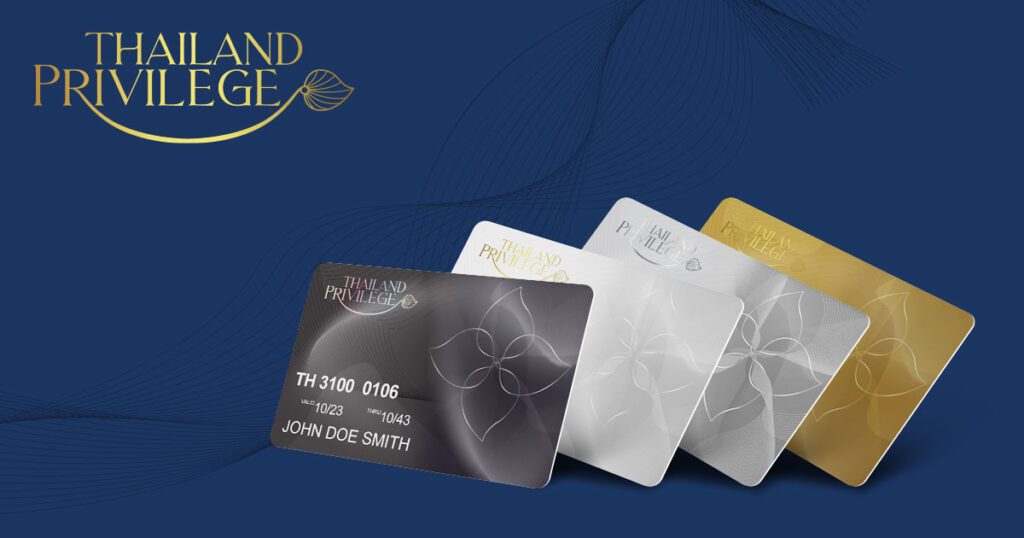
Thailand Privilege Visa (commonly known by its legacy name, the Thailand Elite program) is a government-backed, membership-style long-stay scheme that packages a multi-year multiple-entry visa with concierge services, immigration fast-track and a menu of lifestyle and business privileges. It’s not an immigration route for work or long-term residence in the same way as a work permit or permanent residency, but for people who want reliable long-term access, streamlined bureaucracy and a white-glove experience in Thailand, it can be a practical — and sometimes cost-efficient — choice. This guide explains what the program legally is, how it actually works on the ground, the real business and family use cases, downsides and risks you must plan for, and the operational checklist to complete an application cleanly.
What the Privilege Visa is (and isn’t)
At core, the program is a paid membership run by Thailand Privilege Card Co., Ltd. (the operator of the Thailand Elite/Privilege Card schemes) that grants approved members a long-stay, multiple-entry visa (commonly offered in 5- to 20-year packages) and a package of services: airport fast-track, personal liaison services for immigration matters, assistance with 90-day reporting, concierge and lifestyle discounts, and selected administrative services. It is designed for high-net-worth individuals, long-stay visitors, frequent travelers and people who want set-and-forget access to Thailand without repeated short-term visas. The program does not itself replace a Thai work permit or automatically grant the right to be employed in Thailand — separate permits are required for paid work.
Typical packages, cost ranges and what they buy
Membership packages are tiered — prices and benefit bundles change over time, but the market offers everything from entry-level 5-year memberships to invitation-only 20-year “Reserve” plans. Typical (publicly advertised) price points range from roughly THB 650,000 for the basic 5-year Bronze package up to several million baht for top-tier plans that include higher concierge entitlements and additional “privilege points.” Higher tiers may add spouse/family admission options, more privilege points for premium services, airport lounge transfers, and assistance with immigration formalities. Because program pricing and included services are periodically updated, precise figures should be confirmed on the official program site before you buy.
Real operational benefits — what members actually get
Beyond the headline visa validity, these are the member experiences that materially change travel and residency friction:
- Immigration fast-track and VIP arrival/departure handling. Dedicated lanes, assistance with passport control and baggage, and a liaison that coordinates arrival steps remove the airport stress that frequent travelers hate.
- Administrative concierge for immigration tasks. The program offers managed 90-day reporting, visa-extension reminders and, for some categories, passport handling services so members don’t have to queue at immigration offices for routine renewals. That is particularly useful for people staying continuously in Thailand and for older applicants.
- Lifestyle and business services. These include discounts or special access at partner hospitals, hotels, golf clubs, events and dining; some plans also include assistance with opening bank accounts, obtaining a Thai driving license, or investment advisory introductions.
- Simplicity and predictability. Instead of managing multiple visa applications, the Privilege Visa centralizes a large portion of the paperwork and provides a stable, long-dated status that reduces immigration uncertainty for retirees, investors and remote workers who aren’t being paid in Thailand.
Who should consider it — practical use cases
- Retirees and semi-retirees who want to live in Thailand for months at a time without repeat visa hassles.
- Frequent travelers and regional executives who value time saved at airports and the convenience of immigration assistance.
- High-net-worth individuals who want a straightforward route for long-term access and concierge lifestyle benefits.
- Remote workers and digital-nomad types who don’t intend to be employed by Thai entities (they must still comply with Thailand’s work-authorization rules if they perform local work).
If your primary goal is to obtain a local job, permanent residency or family reunification through visa channels, the Privilege Visa is not a direct substitute — it’s complementary to those routes.
Eligibility, application mechanics and practical timeline
Eligibility is straightforward: a valid foreign passport, clean immigration history (no relevant deportations or major overstays), and the ability to pay the membership fee. The application process runs through the operator: you select a package, submit personal documents and pay the fee (payments now must be traceable to the applicant in many cases), and the operator issues the membership confirmation and handles coordination with Thai immigration for the visa issuance. Depending on where you are, the visa can be affixed at a Thai consulate/embassy before travel, or processed upon arrival/at immigration offices listed by the operator. Expect the administrative process to take several weeks for documentation and consular steps; expedited options may be available for an extra fee.
Practical downsides, legal limits and risks
- Not a work permit. Members who intend to work for Thai employers or provide local services for Thai pay must secure a proper non-immigrant/work permit and follow labor rules; the Privilege Visa does not immunize a member from prosecution for unauthorized work.
- Cost vs. frequent long-term visas. For some residents, the membership fee is cost-effective; for relentless long-term residents who qualify for other state programs (e.g., LTR visa, retirement visa) the Privilege Visa may be more expensive once you consider family coverage and the total duration. Compare alternatives like the LTR, retirement visa (O-A/O-X), or BOI-promoted work routes.
- 90-day reporting remains a requirement. The operator facilitates 90-day reporting but members remain responsible for compliance — missed reporting can trigger fines and complications.
- Political/policy risk. As with any preferential program, government policies and pricing can change; the operator may modify benefits, and immigration practice can shift in response to public policy. Plan for the program’s benefits to evolve over time.
Money, family options and refunds
Family add-on rules vary by tier. Some top tiers allow family members to be included at additional cost; others require each member to be a primary applicant. Refund policies are explicit and typically limited — read the membership terms carefully before payment. The operator also offers escrow or intermediary payment services to manage large transfers and overcome transfer-limit issues. Because the program is a private membership under a government mandate, treat the contract terms and cancellation clauses as the controlling commercial documents.
Decision checklist — how to evaluate whether the Privilege Visa is right for you
- Define your true objective: long-stay convenience, work in Thailand, or family relocation.
- Compare total cost (membership fee + family add-on fees + expected immigration/legal costs) against alternatives (LTR, retirement visa, work-permit + Non-B visa routes).
- Confirm whether required services (bank introductions, hospital partners, driver’s-license help) match your practical needs.
- Check the operator’s current membership schedule, refund and transfer terms, and the exact list of partner services.
- If you plan to work for a Thai company, get firm legal advice on the work-permit timeline and how the Privilege Visa interacts with employment authorization.
- Ask your consulate whether the program’s confirmation letter satisfies visa-issuance procedures in your jurisdiction and whether you must appear in person at the embassy for the visa sticker.
Final practical note
For the right profile — frequent high-value travelers, retirees who value convenience, and investors who prize stability of entry rights — the Thailand Privilege Visa can eliminate much of the paperwork friction that plagues long stays. It buys time, convenience and white-glove services rather than immigration rights to work. Evaluate it as a membership/concierge product with a visa attached: treat the contract terms carefully, confirm the operator’s current service menu and pricing, and plan for separate legal steps (work permits, family immigration, tax residency) if your objectives extend beyond long-stay access.